




Knowledge Hub


Why livelihoods? Secure livelihoods offer the extreme poor a pathway to forge their way out of poverty. According to the most recent figures, an estimated 831 million people are trying to survive on less than $3 USD per day. That equates to around 10% of the world’s population living below the global poverty line.
We implement our livelihoods programmes in some of the poorest and most vulnerable places in the world. Extremely poor people in developing countries face many risks. According to the Global Report on Food Crises (GRFC) 2025 conflict, economic shocks, climate extremes and forced displacement continue to drive food insecurity and malnutrition around the world, Conflict leads to a disruption of market systems and the loss of peoples’ livelihoods, rising food prices make nutritious food less affordable. An increase in the incidence and severity of climate-related disasters is negatively impacting on crop yields and the availability of food for subsistence farmers. As a result, people are forced to leave their homes, with many migrating to crowded urban areas in search of more secure livelihoods and are facing increased competition for income-earning opportunities.
Our programmes are designed in accordance with the specific requirements of each local context. We aim to address the obstacles and the systemic changes that are required to bring about effective and sustainable improvements for the poorest and most vulnerable people. We do this through a broad variety of activities that range from climate smart agriculture techniques in rural settings, to technical skills training and small-business support in rural and urban settings with the aim to make the livelihoods of households sustainable meaning more diverse, climate adapted and profitable.


A closer look at our livelihood programmes
People living in extreme poverty struggle to earn enough to ensure that their families have enough to eat, get adequate health care and an education. Our livelihoods programmes aim to give them the tools to ensure they are able to earn a sustainable living, helping them to learn new skills, improve the productivity and nutritional value of their crops and set up small businesses to diversify their livelihoods and thus making them more resilient to climate change and other shocks.
Climate-Smart Agriculture (CSA)
Climate change is now an accepted reality – the earth’s climate is warming. More frequent and longer-lasting periods of extreme temperatures are now a reality, as are more frequent and less predictable flood events and dry-spells.
The communities that we work with are on the front line of these climate effects. Whether it be the Sahelian zones of Chad and Niger, or the flood plains of Bangladesh, most rely heavily on farming, fishing and livestock-rearing for their livelihood and find themselves in an increasingly precarious position. For example, many of the farmers we work with must now plant their seeds two or three times in a year because rains fail during the early stages of crop growth and final yields are harshly compromised.
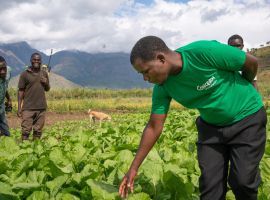
We're supporting communities to adopt Climate-Smart Agriculture (CSA) practices which adapt their farming systems to become more resilient to a less predictable climate. The practices we promote include the diversification of crop varieties, including those that are more drought-tolerant and fast maturing, increasing access to improved farming skills and technologies such as better agriculture extension services, and strengthening links with the private sector to facilitate access to agricultural inputs, from seeds, to new equipment such as solar water pumps.
Graduation programme
Green Graduation
Strengthening Food Systems
Cash and Voucher Assistance





Publications on the theme of livelihoods


Other ways to help

Donate now
Give a one-off, or a monthly, donation today.

Join an event
From mountain trekking to marathon running, join us for one of our many exciting outdoor events!

Buy a gift
With an extensive range of alternative gifts, we have something to suit everybody.

Leave a gift in your will
Leave the world a better place with a life-changing legacy.

Become a corporate supporter
We partner with a range of organisations that share our passion and the results have been fantastic.
Create your own fundraising event
Raise money for Concern by organising your own charity fundraising event.